OVERVIEW
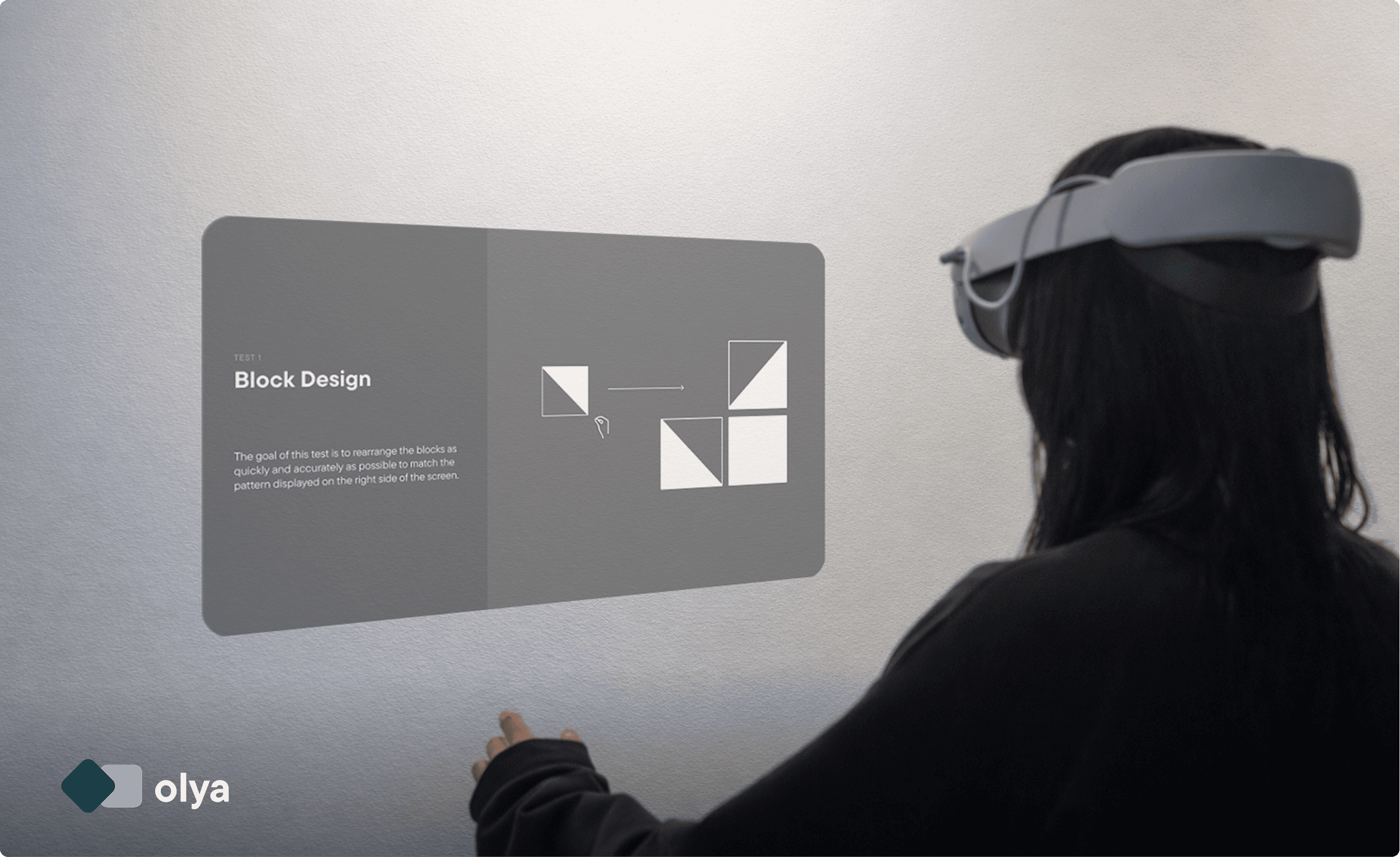
Olya leverages advancements in VR and AI to partner with healthcare providers in delivering comprehensive mental health evaluations. By streamlining assessments and expanding access to diagnostic tools and resources, Olya makes high-quality, specialized mental healthcare more accessible than ever.
Team
Jana Radwan
Contribution
Research
Visual Design
Design System
Instructor
Paul Hoover
Kai Hofmeester
Time Frame
5 Weeks
BEGINNINGS
Problem Space
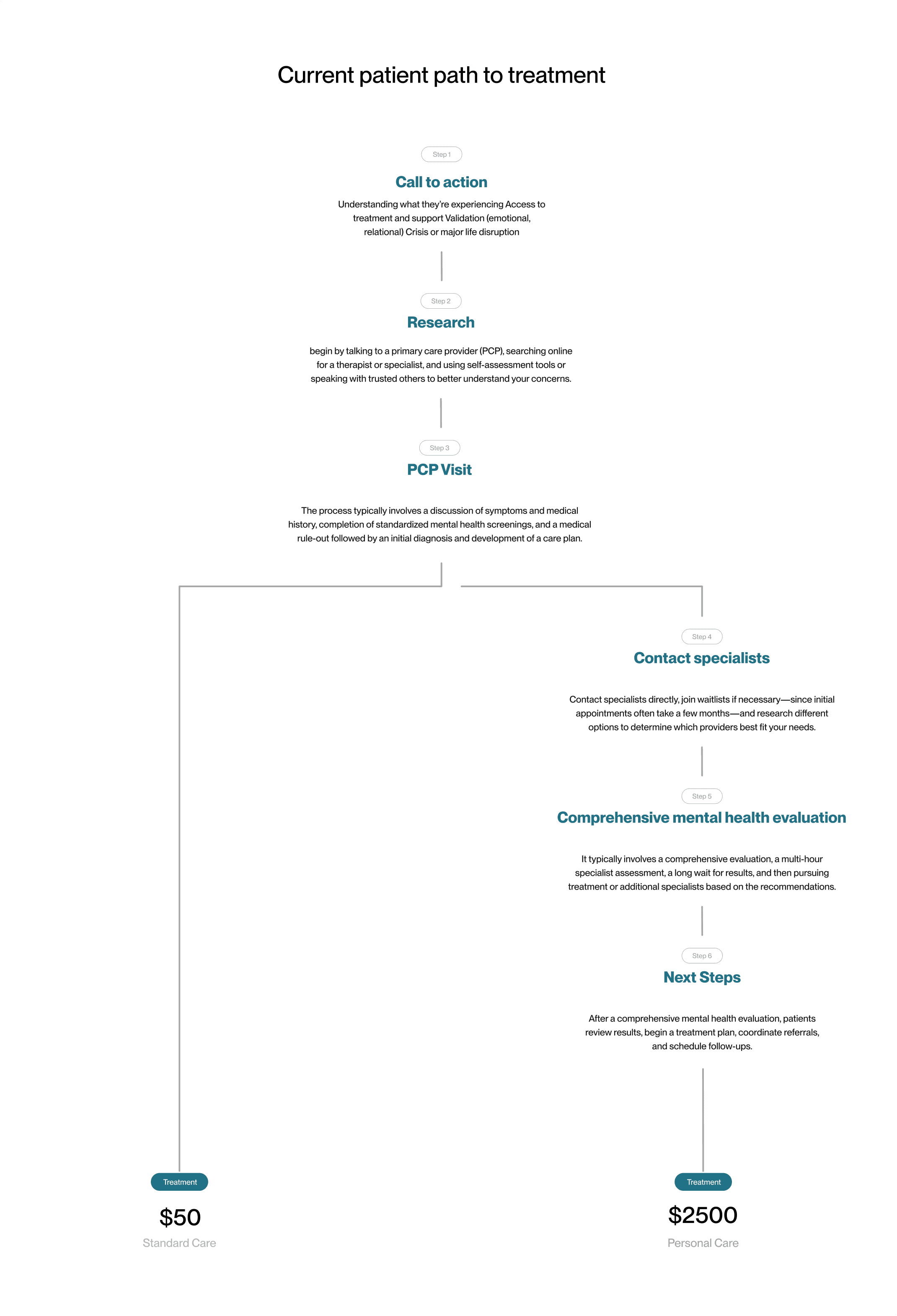
As mental health declines globally, solutions that help people find appropriate treatment have not kept pace. Limited personalization, long wait times, high costs, and the difficulty of staying motivated for an issue often perceived as less serious create a difficult path to care, resulting in significant patient drop off.
Standard care pathways often delay appropriate treatment because they do not fully assess the patient from the start. Comprehensive mental health evaluations provide a much clearer understanding of an individual’s needs, but they are expensive and often inaccessible, even though they offer a strong foundation for pursuing effective, personalized treatment.
BEGINNINGS
Problem Space
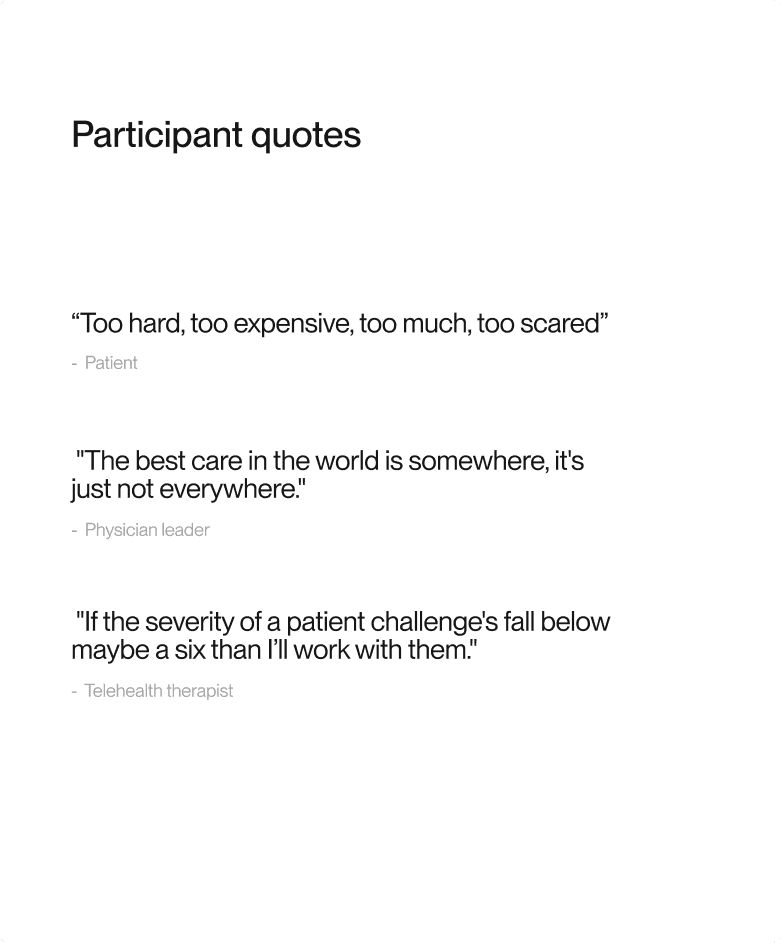
To confirm our understanding of the problem, we conducted eight casual interviews alongside extensive secondary research, ensuring we examined the issue from multiple perspectives. We again found that cost, lack of clarity, and limited access to personalized solutions were the primary barriers preventing patients from receiving the care they need.
From there we began generating concept cards and storyboards based in our findings.

GROUNDING
Trustworthy Design
As we refined the interaction model, I wanted to better understand how branding influences perceptions of trust within healthcare. To ground our decisions, we conducted a deep dive into Epic’s MyChart, identifying which aspects of the platform conveyed credibility and clarity, and which could be improved.
Using insights from this audit and secondary research on healthcare design and accessibility, we developed a typography and color system intended to strengthen trust between patients and providers while maintaining a highly accessible interface.


LEARNING DEVELOPMENT
VR Experience
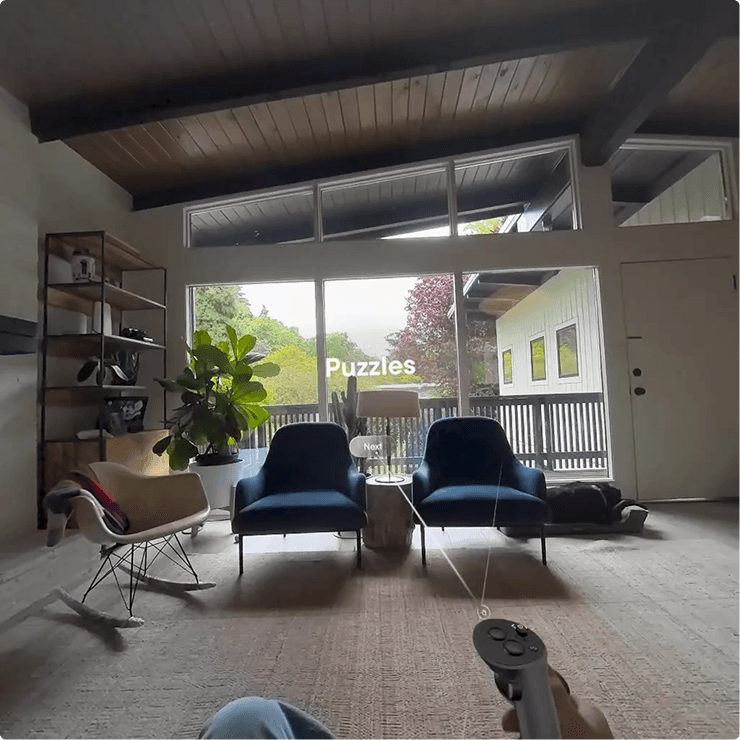
With limited time to build the VR portion of the experience, I pivoted to ShapesXR after realizing a full build in Unity wouldn’t be realistic within the timeline. Using it, I created a quick prototype of the cube test taken directly from the Wechsler Adult Intelligence Scale, a task neuropsychologists use to evaluate cognitive ability.
While simple, the prototype was enough to clearly communicate the concept and helped us successfully present the idea despite the tight timeline.
CONCLUSION
Final Thoughts
Going forward, Jana, our instructors, and I saw real potential for something like this to exist beyond the classroom. Faculty encouraged us to continue developing the idea and consider pitching the concept to healthcare companies.
One direction I was especially interested in exploring was how VR could expand the possibilities for mental health diagnostics through simple cognitive tests like these. By collaborating with students in physiology and related fields, I believe we could have pushed the concept much further. With more time, I think it could evolve into a product that fully realizes the idea and helps make personalized mental health diagnostics more accessible.