OVERVIEW
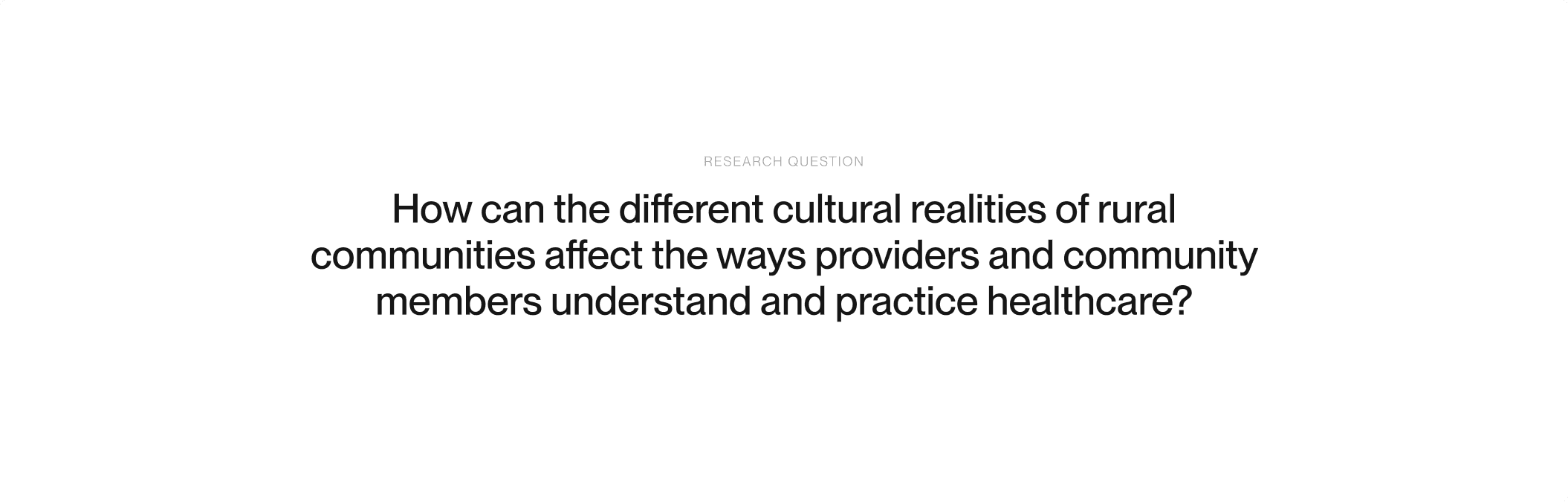
This project Explores how the cultural realities of rural communities shape how providers and community members understand and practice healthcare.
Team
Jana Radwan
Kaitlyn Ellington
Contribution
Research
Visual Design
Design System
Instructor
Audery Desjardins
Time Frame
5 Weeks

BEGINNINGS
Contribution + Framing
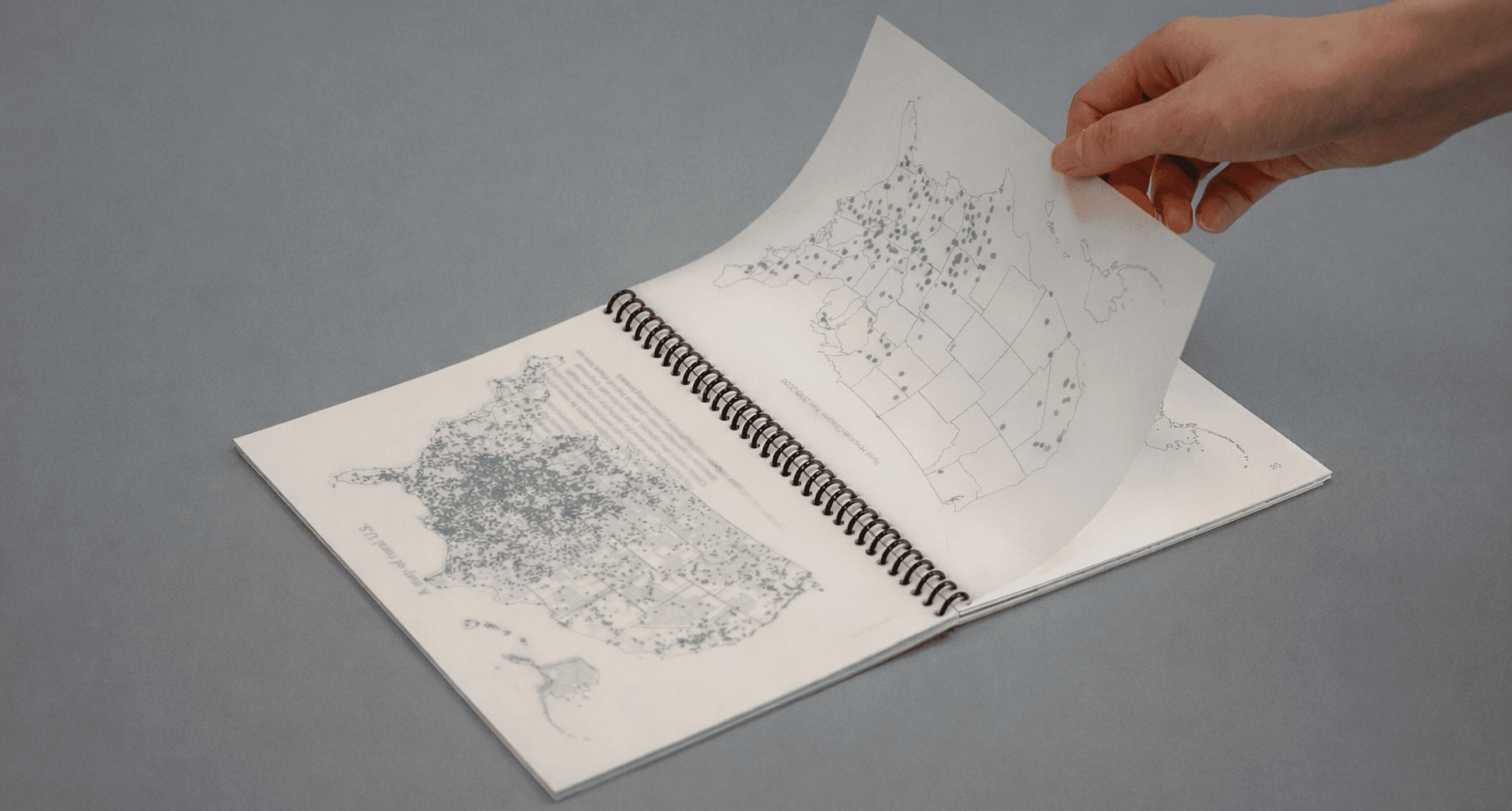
This Project examined how residents in rural America understand and practice care throughout different communities. Our team conducted remote fieldwork; synthesized transcripts to map patterns in trust, scarcity, and belonging; and created speculative sketches centered around the findings and tensions we uncovered.
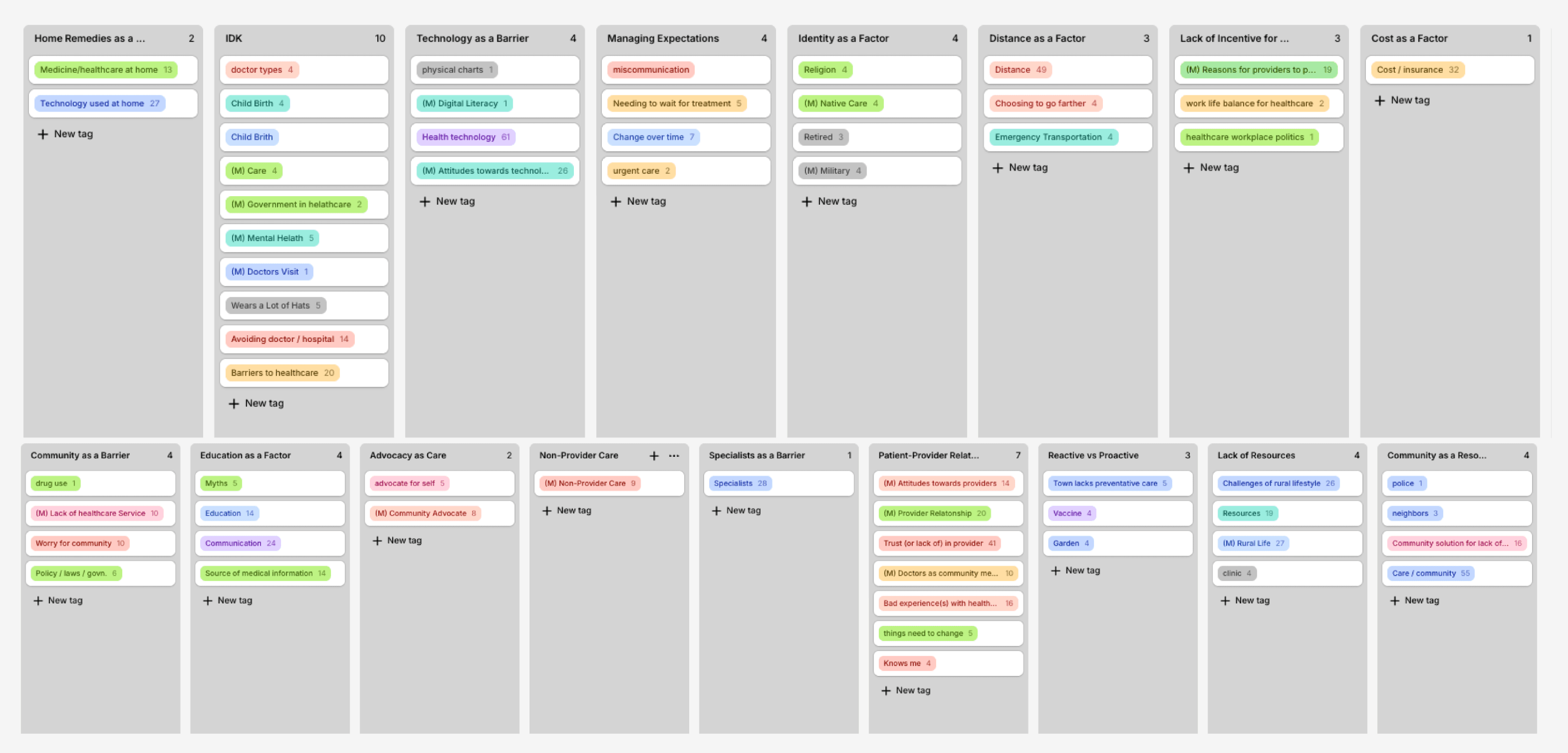
During this project I primarily focused on synthesis of research, after every interview going back and cross referencing with secondary research. Digging up old infographics and articles and cross referencing one another to create a new holistic view on what actually causes this persisting problem. As well as the evolution of our visual style throughout the project.
PRELIMINARY RESEARCH
Problem Space
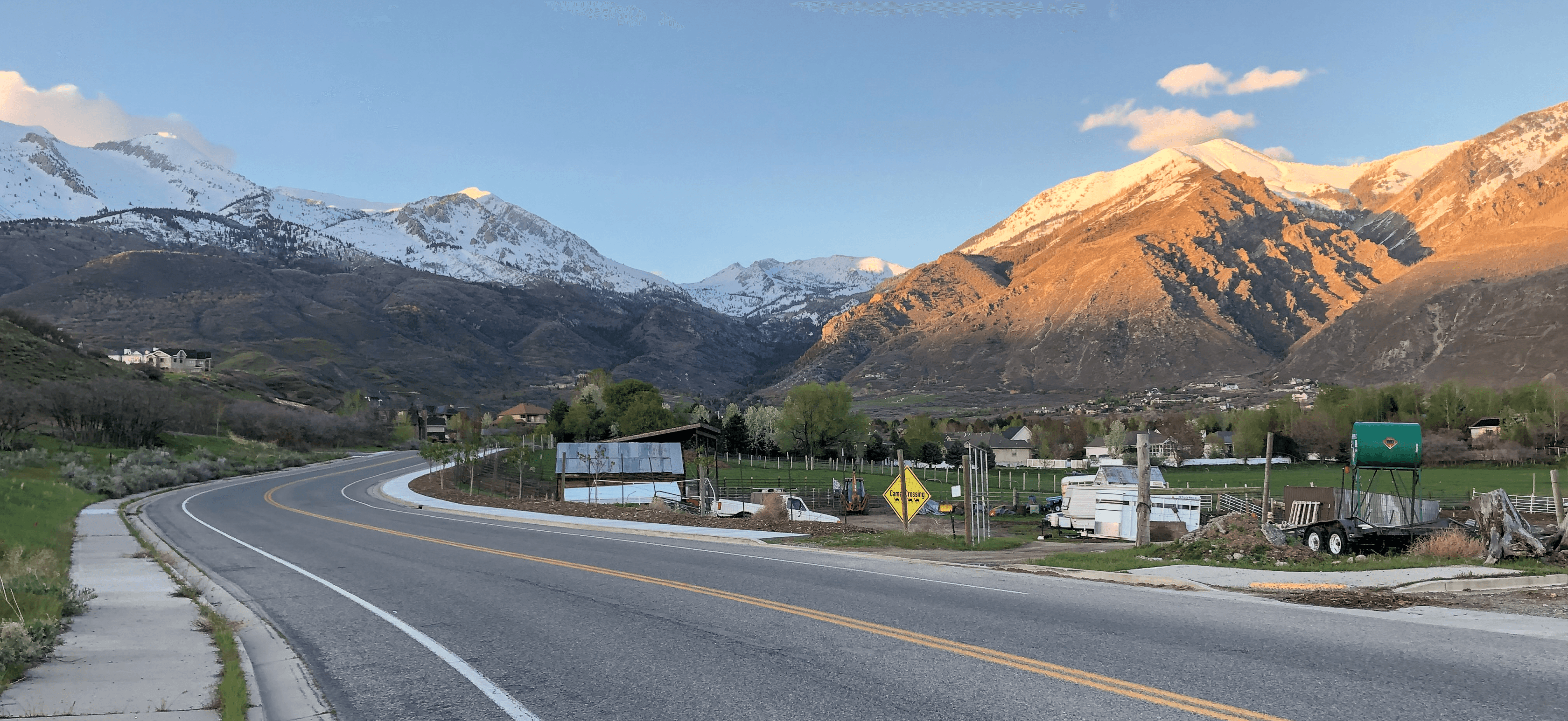
Our team, along with many others, was already aware of the lack of accessible care in rural America. However, understanding the factors contributing to that reality, from policy decisions to social constructs, required significant preliminary research before we could begin interviewing participants.
The project prompt, which focused on technology’s role in care relationships, also shaped our early decisions. We worked to determine whether advancements such as telehealth were improving access and strengthening connections between patients and providers, or in some cases hindering them.
CONDUCTING RESEARCH
Decoding & Methods
Recruitment was one of our biggest barriers, particularly assembling a diverse participant pool. We relied on friends of friends to reach individuals in areas we classified as rural. Because there is no single clear definition of “rural” in the U.S., confirming we were speaking with the appropriate communities was a challenge.
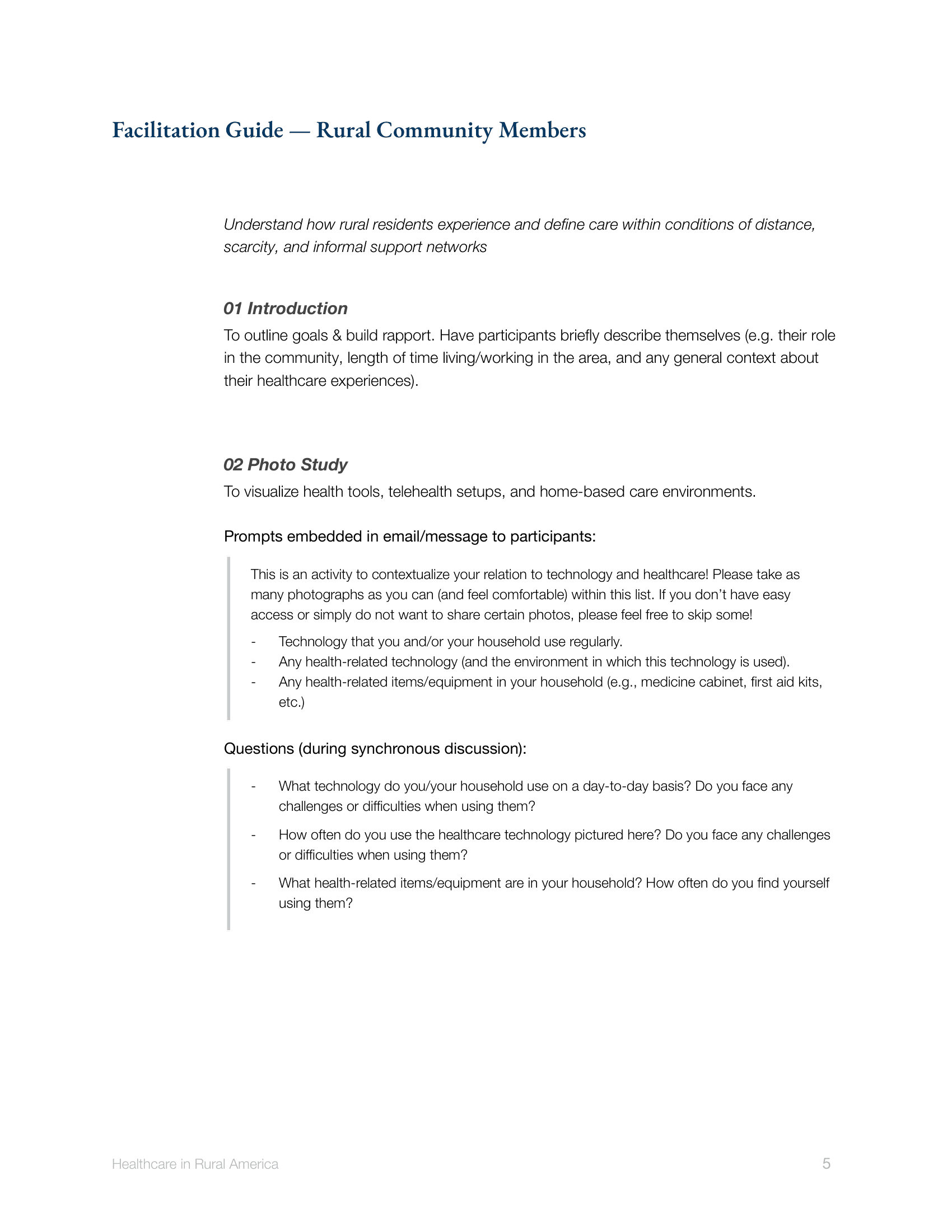
Each virtual interview lasted about an hour and followed five parts: introduction, photo study, directed storytelling, systems mapping, and a final interview discussion.
CLASSIFYING
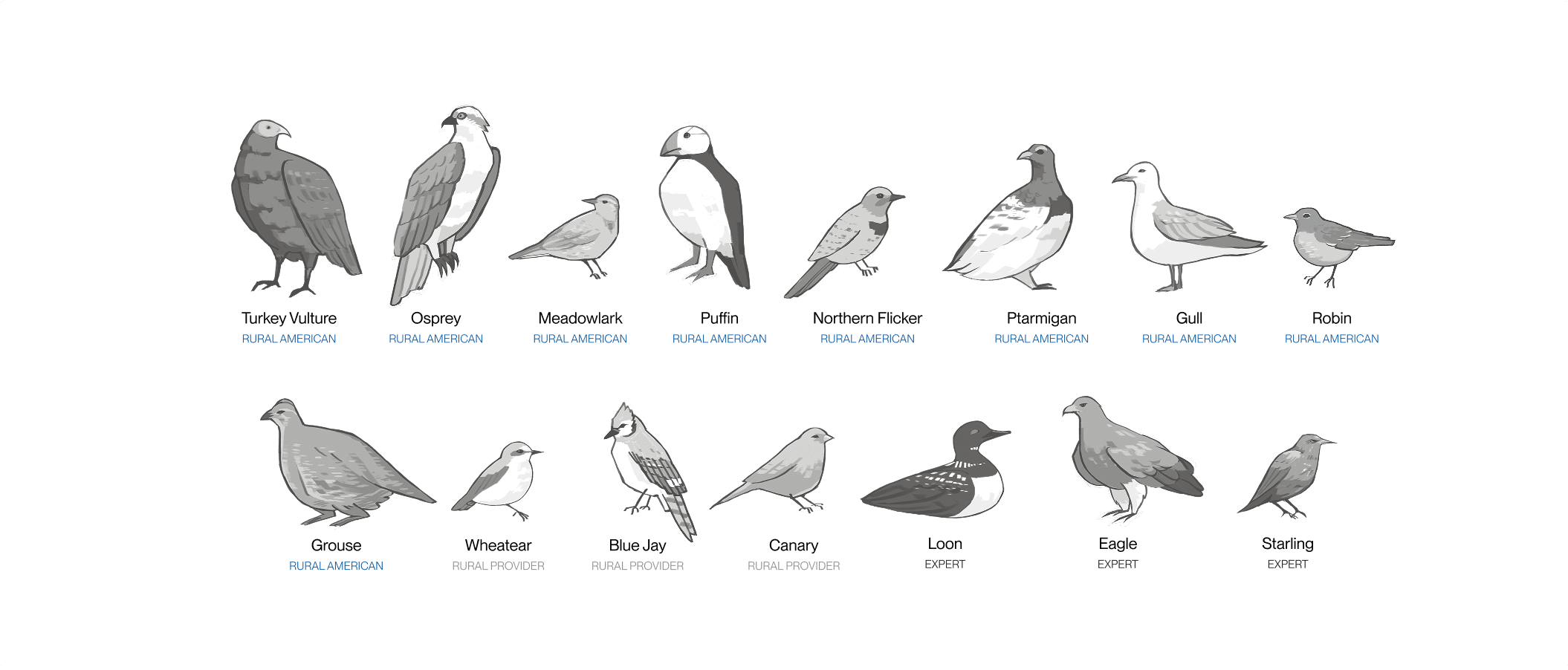
Participants (About the birds)
Our participants were primarily rural Americans, along with a few industry experts and healthcare providers, which helped us more holistically understand the factors contributing to distance in care relationships.
In one interview, Jana Radwan recalled a participant who affectionately called themselves “Legal Eagle.” From there, we began associating participants’ personality traits and regional identities with bird species that mirrored them. Combined with Kaitlyn’s illustration skills, this evolved into a meaningful visual system for classifying and anonymizing participants.

CONDUCTING RESEARCH
Decoding & Methods
Recruitment was one of our biggest barriers, particularly assembling a diverse participant pool. We relied on friends of friends to reach individuals in areas we classified as rural. Because there is no single clear definition of “rural” in the U.S., confirming we were speaking with the appropriate communities was a challenge.
Each virtual interview lasted about an hour and followed five parts: introduction, photo study, directed storytelling, systems mapping, and a final interview discussion.
FINALIZING RESEARCH
Sketches
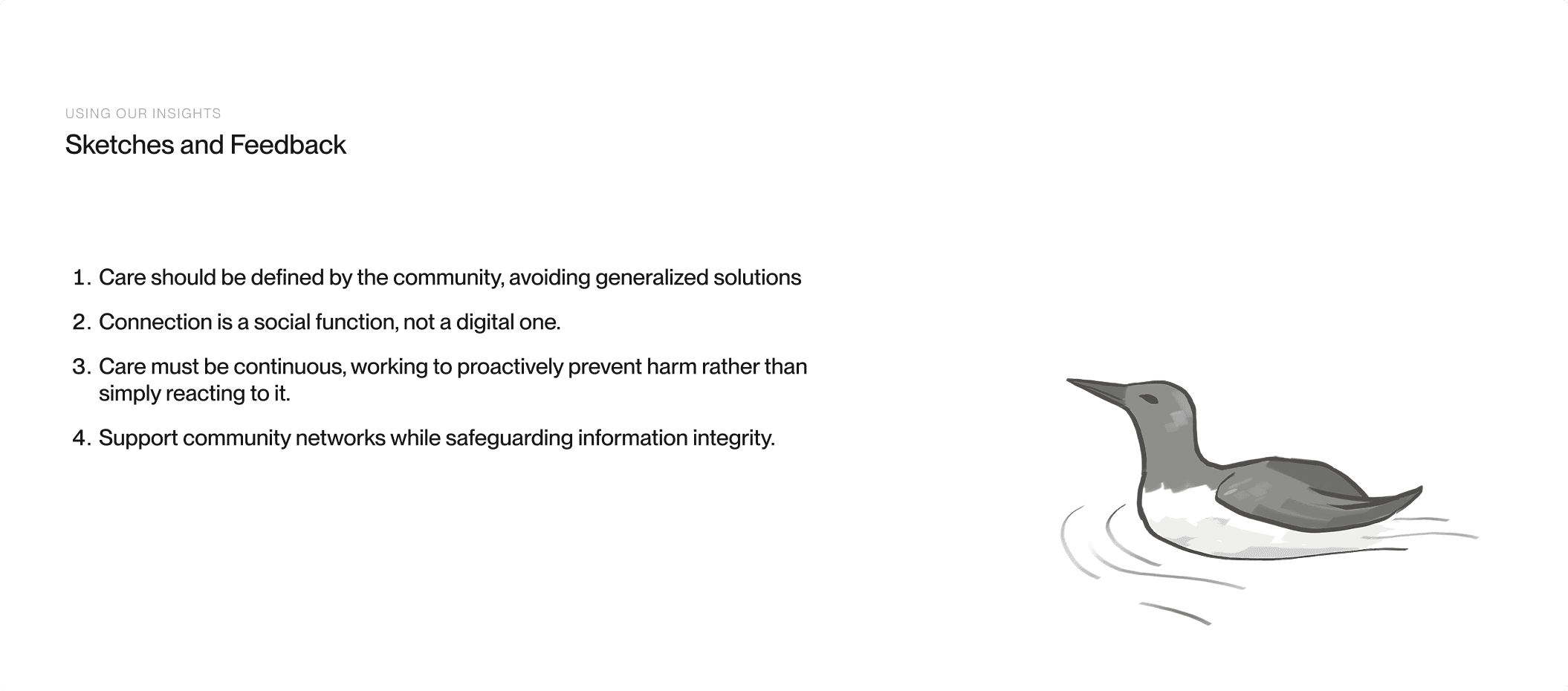
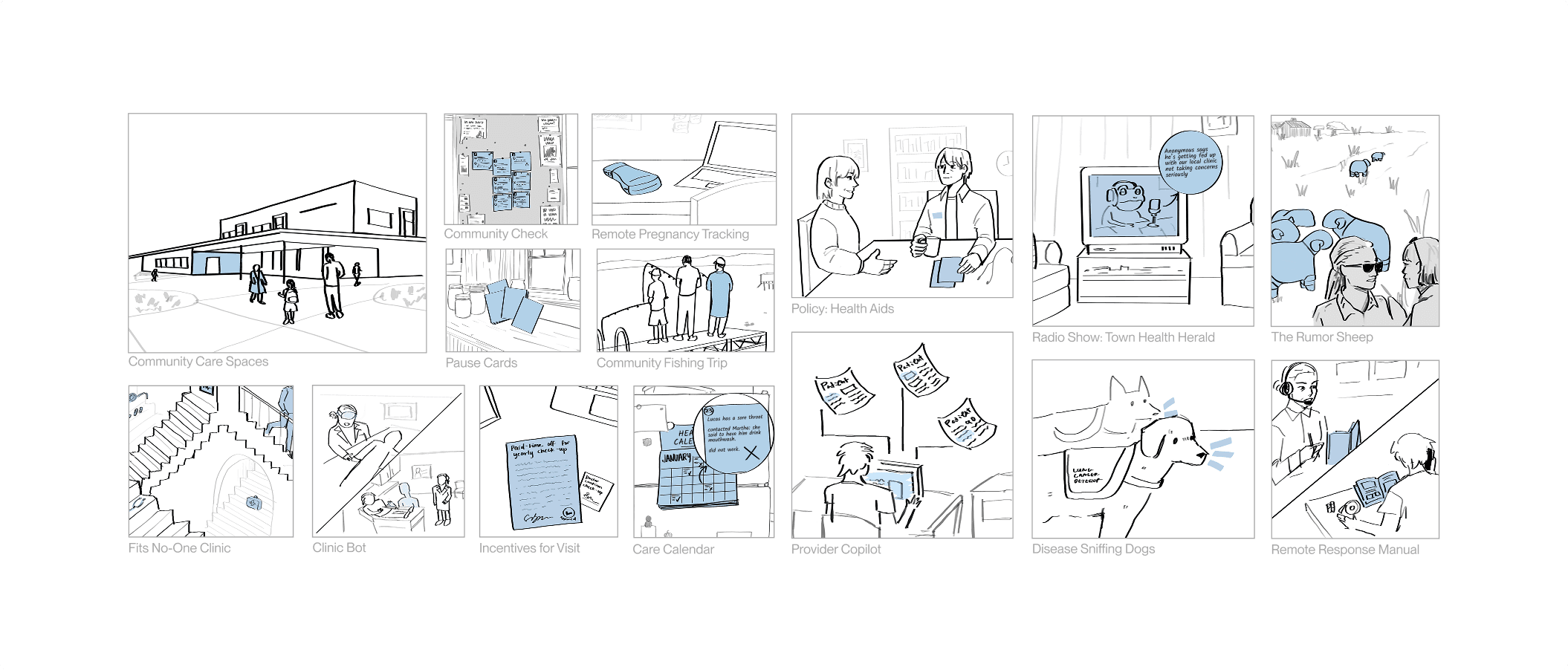
Finally, we developed sketches based on our findings and shared them with several participants to test potential solutions. This helped us refine our research, confirm we were addressing the right aspects of healthcare, and ensure our approaches could benefit diverse rural communities rather than just one.
CONCLUSION
Final Thoughts
This has been one of the most rewarding and impactful projects I’ve had the opportunity to be part of. Our team’s complementary skill sets, combined with a shared passion for the topic, resulted in some of our strongest work in the program.
Professor Desjardins’ insight and guidance were invaluable in helping us navigate the complexities of such a vast and challenging problem space. I am deeply grateful for her expertise and support throughout the project.
