OVERVIEW
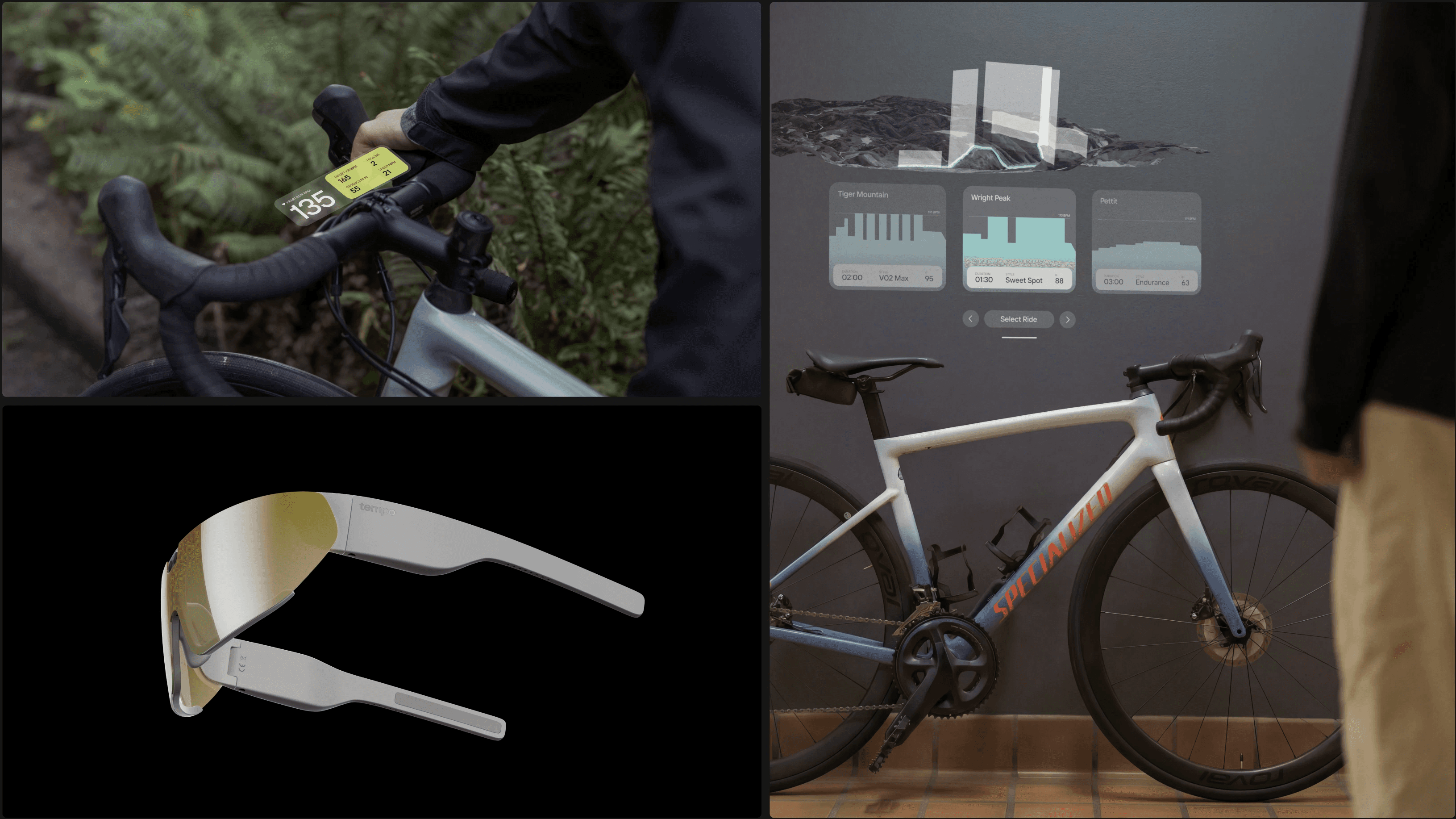
Tempo is a pair of AR glasses designed for performance cyclists, addressing two of the biggest challenges in the sport: tracking ride metrics and managing pre- and post-ride maintenance and planning.
Team
Hayden Dernbach
Lia Chon
Kiana Gregorich
Kaitlyn Ellington
Caleb Aguiar
Eli Kimchi
Johann Devillers
Instructor
Axel Rossler
Time Frame
4 Weeks
BEGINNINGS
Problem Space
Tempo addresses three core challenges cyclists face today. For every hour spent riding, cyclists often spend an additional 30 to 60 minutes planning routes, preparing, and maintaining gear, creating friction that limits how often they can get out on the bike. Cyclists also rely on five to eight different devices to complete a single workflow, and managing charging, connectivity, and data accuracy introduces unnecessary complexity both before and during rides.
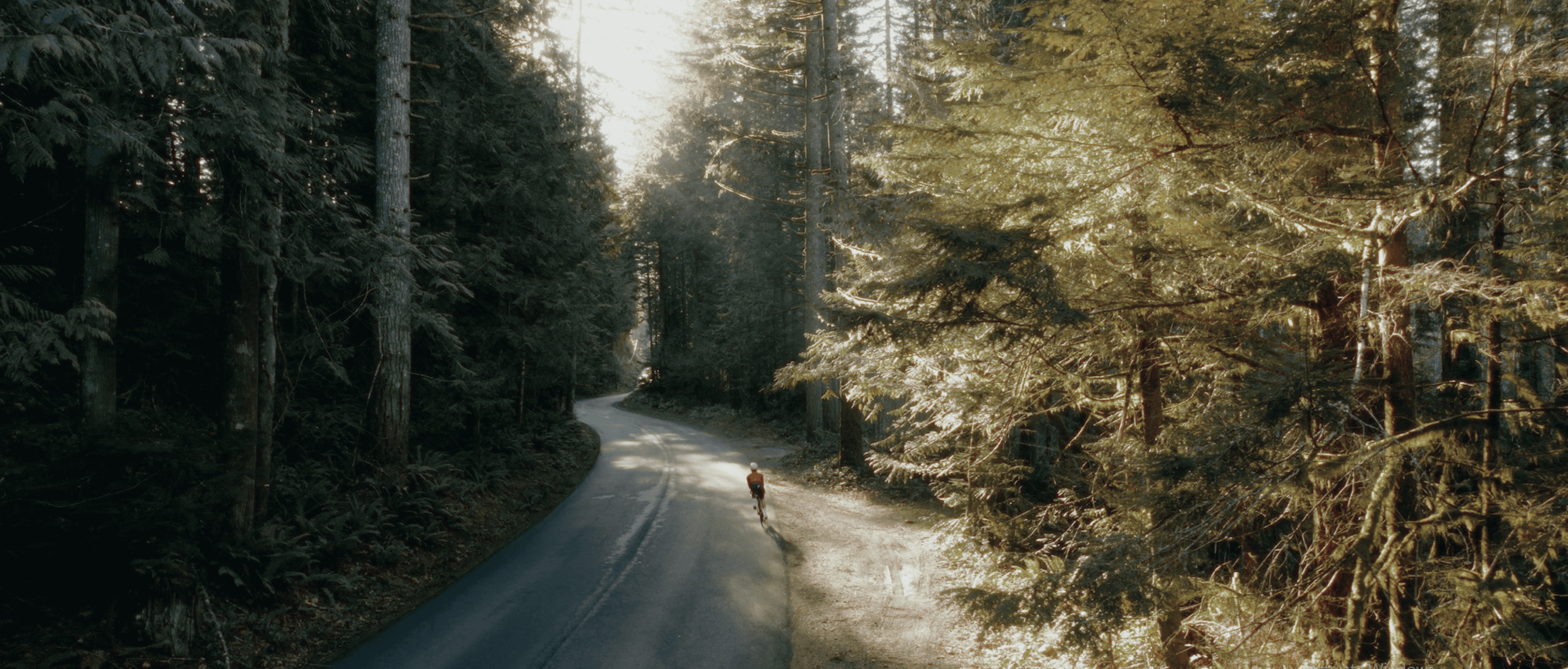
At the same time, cyclists are driven by a love of the outdoors and a desire to improve, yet the most controlled training environments exist indoors where variables like terrain and wind are removed. While effective, these workouts are often monotonous and limit opportunities to develop real world technical skills.
APPROACH
Design System
After defining our problem space and conducting secondary research, we analyzed existing solutions alongside the technical limitations of current AR systems. Two key insights emerged that shaped our approach.
Voice-only interaction models break down under physical strain. As a cyclist’s heart rate rises above 130 bpm, speaking commands becomes exhausting and inefficient, especially when trying to conserve breath during high-intensity efforts.
Secondly, the interface needed to be instantly readable, minimally intrusive, and only appear when necessary, allowing cyclists to stay focused on the terrain ahead without distraction.
VISUAL DESIGN
Nested Design System
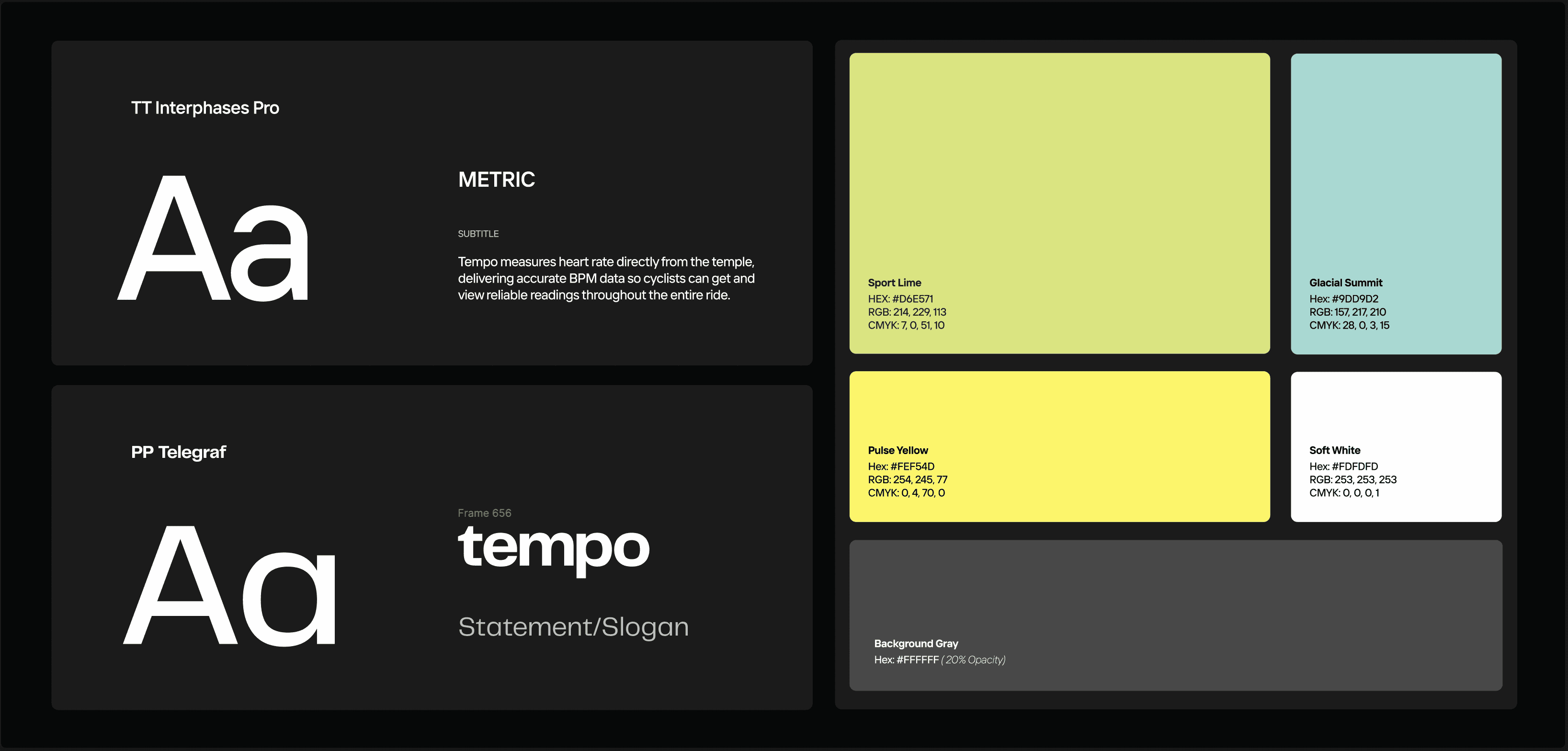
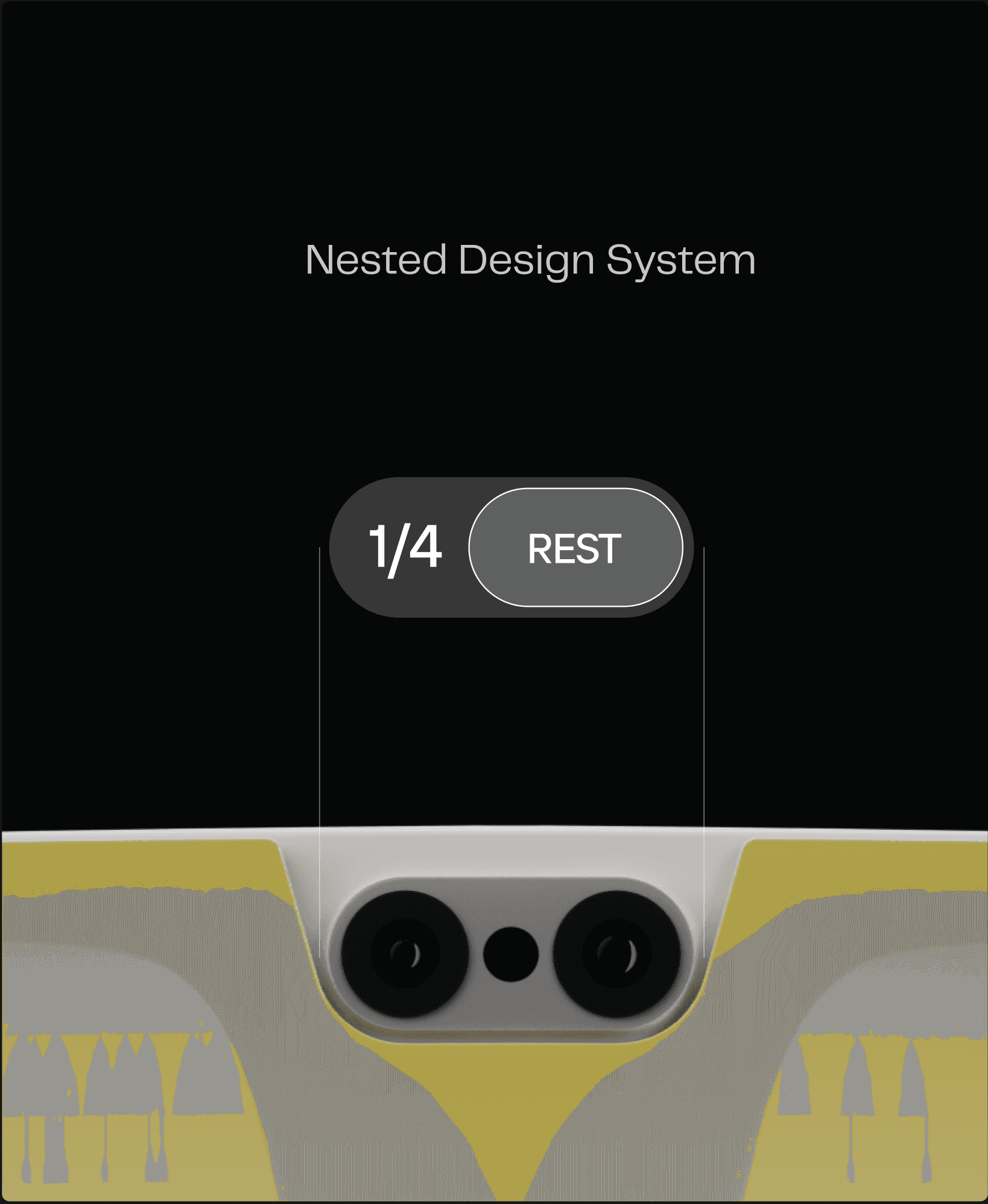
Working within the limitations of additive light, we selected colors near 100% CMYK values to maximize legibility. Paired with TT Interphase, this ensured a highly readable interface in AR. We also designed the system to take advantage of 3D space, layering panels with depth in what we call a nested design system. This approach was carried through both the interface and the physical design of the glasses to create a cohesive design system.
INDUSTRIAL DESIGN
Prototype
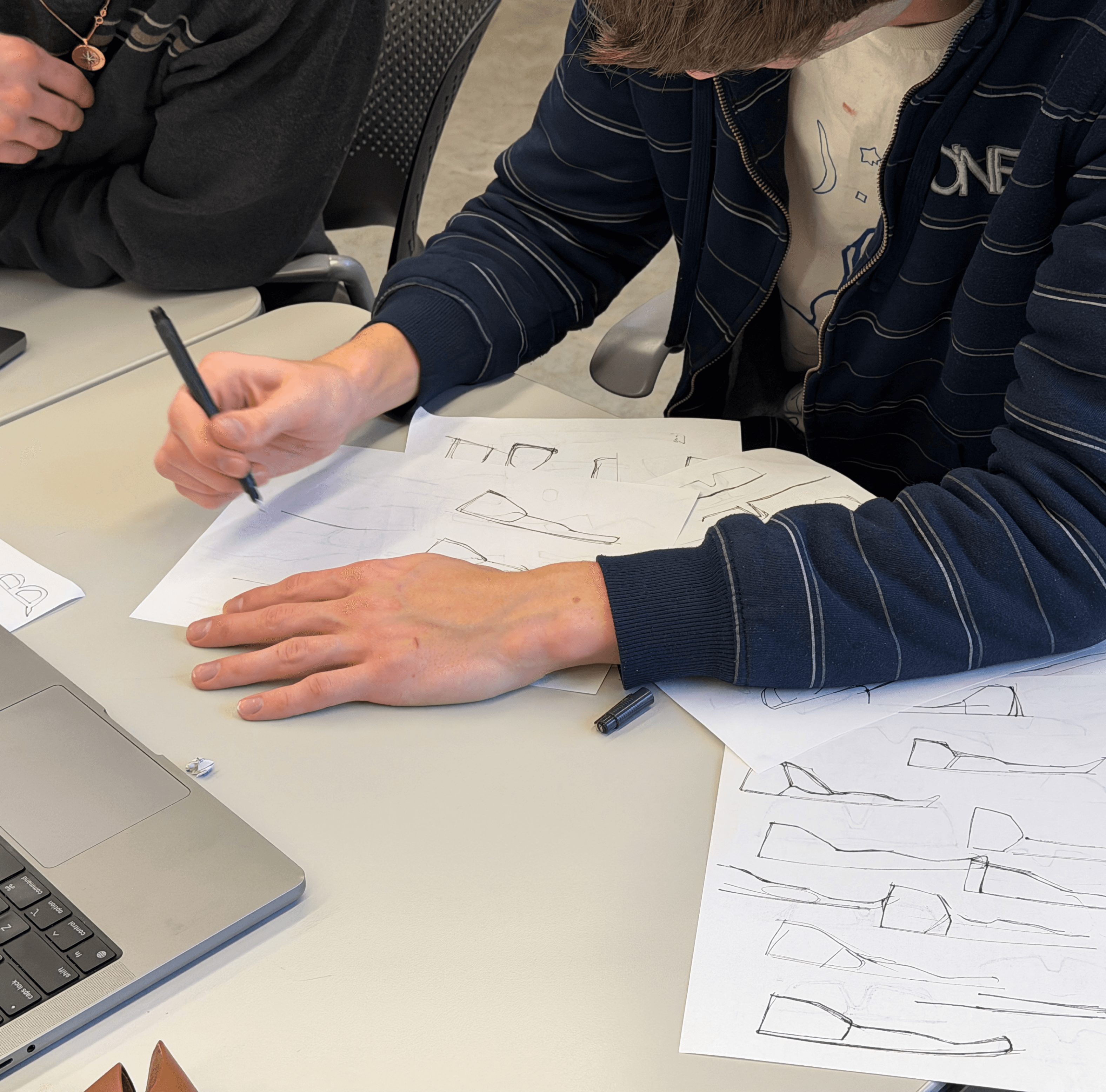
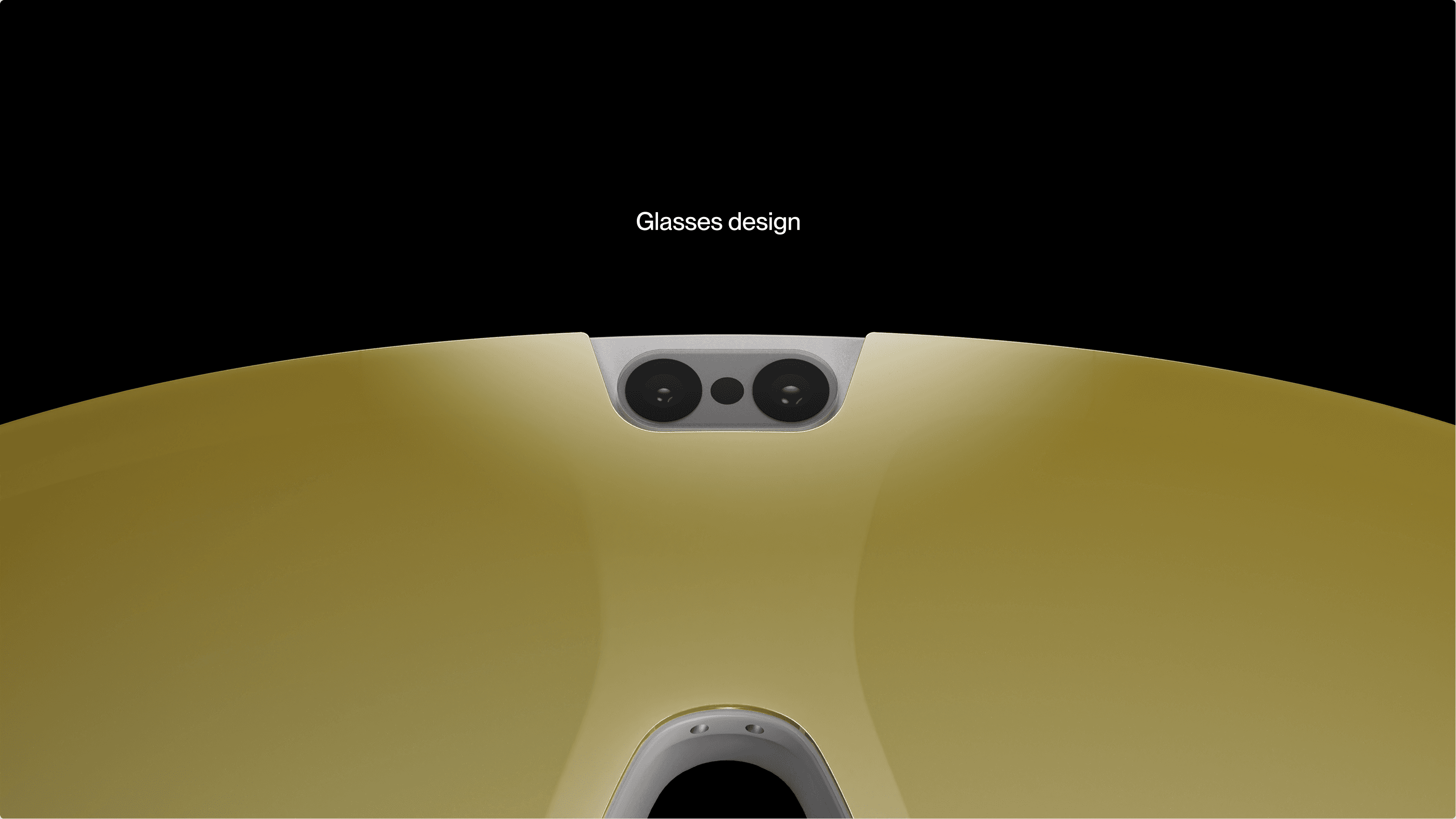
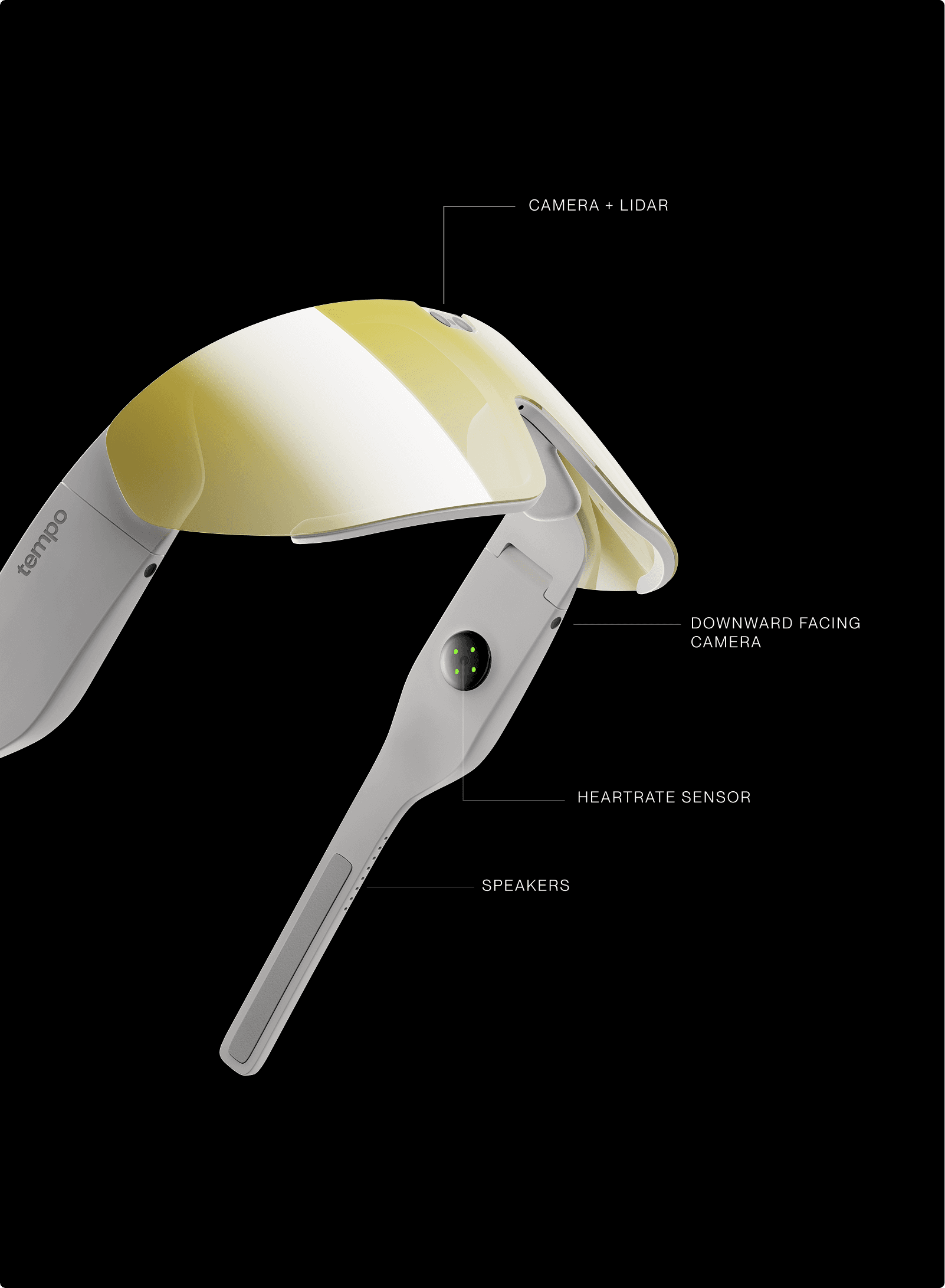
For our glasses design we collaborated with two incredibly talented industrial designers, Eli Kimchi and Johann Devillers. I worked closely with them to ensure the features and visual language of the glasses aligned with the interaction design and interface system. The product was grounded in a vision of technical feasibility within the next ten years, informed by the current state of the industry.
PROTOTYPE
Features
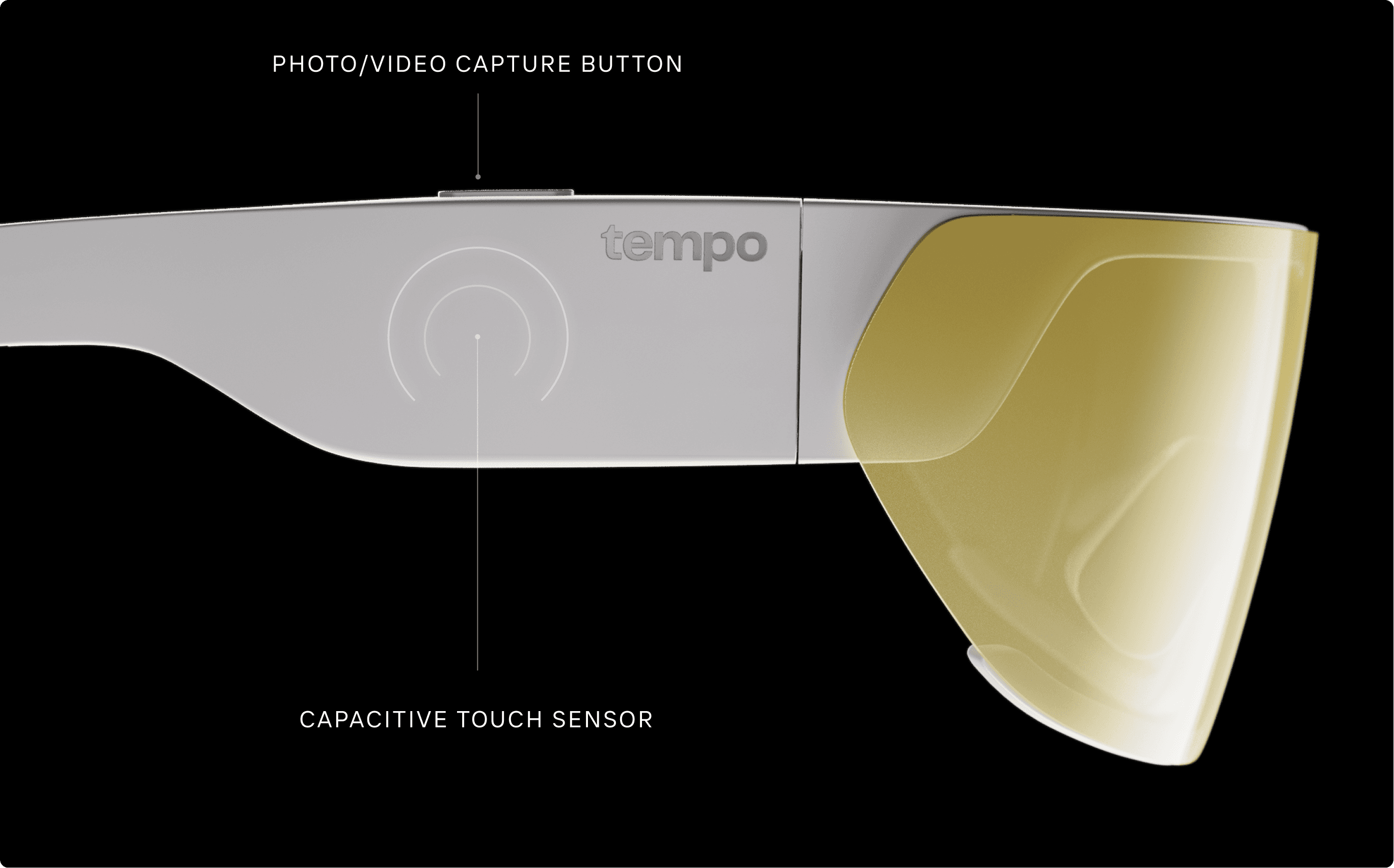
Our glasses address the fragmentation of multiple devices in a single cycling workflow by consolidating the functionality of a phone, earbuds, bike computer, heart rate monitor, and cadence sensor into one system. Directions, heart rate, speed, and music are all accessible with the flick of a finger, reducing friction and allowing cyclists to stay focused on the ride.
INTERACTION DESIGN
Gestural Navigation
Leveraging the cameras built into the glasses, we developed a gestural navigation system that allows cyclists to move through screens using simple hand movements, such as raising an index finger for aero bars or using thumb gestures on flat bars. Hayden led this effort, building a working prototype in Unity on a Meta Quest 3 to demonstrate the feasibility of the interaction.
PUTTING IT ALL TOGETHER
The Video
Tempo brings together the core tools performance cyclists rely on into one seamless experience, combining the excitement of racing, the power of performance tracking, and route planning in a single system. By reducing friction, it allows cyclists to focus on what they love most, riding and enjoying the outdoors.
This project was a true team effort. Lia’s storyboarding, Hayden, Kiana, and Kaitlyn’s After Effects work, and my collaboration with Caleb on cinematography all came together to capture the sense of excitement and curiosity we saw as central to the story telling.
BREAKDOWN
Feature Highlight
Tempo was built around a non-intrusive interface, present when needed and otherwise out of sight. This thinking drove key design decisions, such as anchoring performance metrics to the handlebars so information feels contextual without disrupting focus.
Beyond the ride, Tempo supports ongoing bike maintenance by helping cyclists understand when to repair or replace components and guiding them through the process themselves. Many cyclists shared that maintenance is time-consuming and often intimidating, especially with the fear of damaging their bike. Tempo aims to reduce that friction and build confidence off the bike as well.
CONCLUSION
Final Thoughts
While Tempo was designed for cycling, the core principles extend to other metrics-driven sports such as running and rowing. The system focuses on real-time performance feedback, low-friction interaction, and non-intrusive information delivery, which are equally relevant across endurance activities. With more time, we would have explored how Tempo could evolve into a multidisciplinary product.
This project was a true team effort. I had the opportunity to work alongside incredibly talented designers, and I’m grateful for their trust, collaboration, and willingness to bring this idea to life. It would not have been possible without each person’s unique contributions, and I hope this is not the last time we get to work together.